The Little Card That Made Silence Mean Yes
6 min read
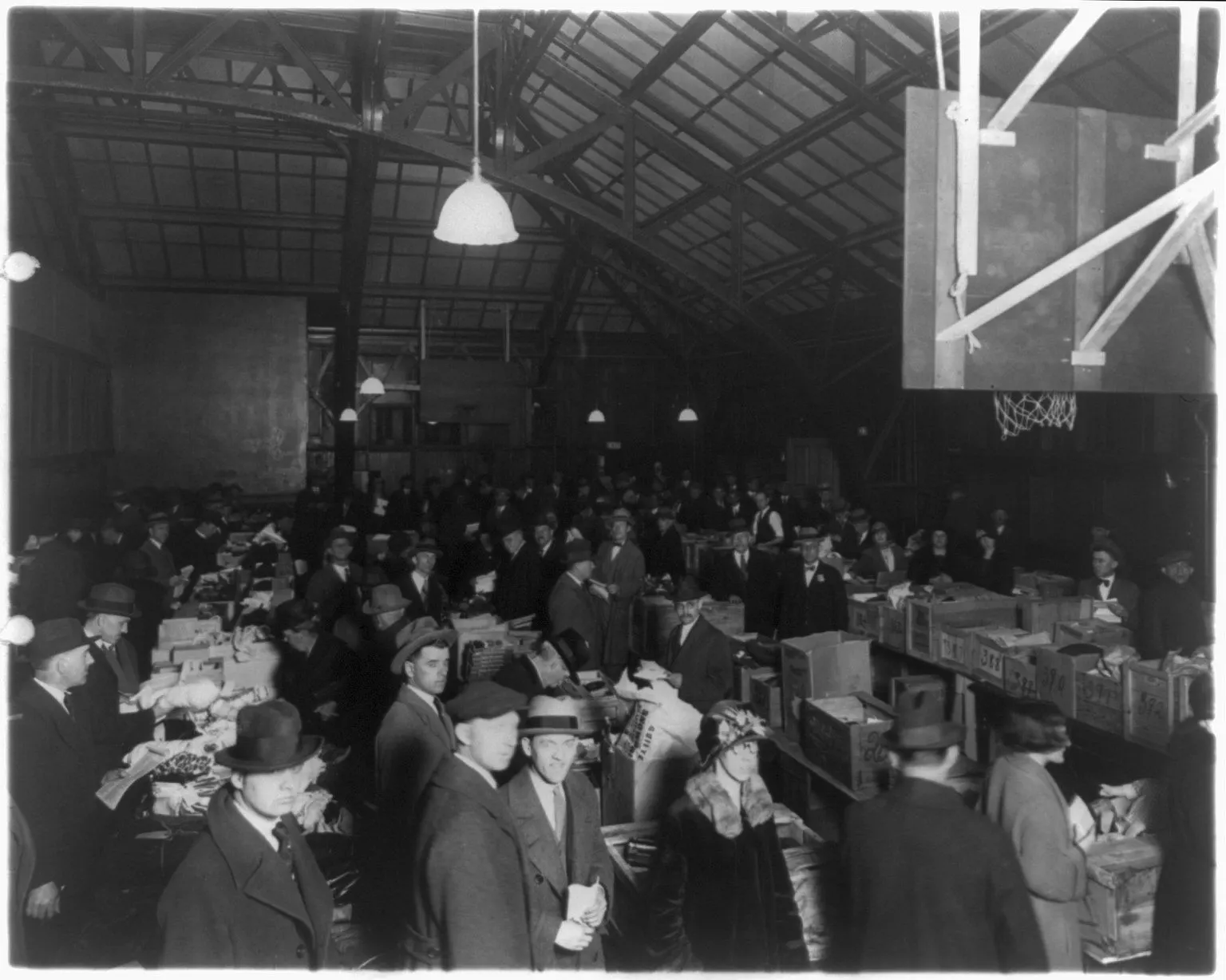

Picture a small card sitting on a kitchen counter, next to the mail. A new book is on its way, chosen for you by the club you joined, and you meant to send the card back to say no thanks. Then dinner happened, and the week got away from you.
That was the quiet trap at the heart of the Book-of-the-Month Club. Each month's featured title arrived with an invoice, unless you had earlier returned a card declining it.1 In that system, doing nothing was treated as a yes.1 It is a strange idea when you say it plainly, and it is the same idea behind many of the subscriptions on your phone today.
A club for good intentions
The club began with a bet on human nature. Its first selection went out in April 1926 to 4,750 original members, and as one company history puts it, the whole premise was that "most book lovers do not read as many books as they intend to."2 The founders were Harry Scherman, Maxwell Sackheim and Robert K. Haas.1 Scherman had already tried mail-order books with the Little Leather Library in 1916, which faded, so the partners relaunched the idea as something new.2
Members agreed to buy at least four books a year, and the picks came by mail.2 In the early years the books sold at full price with postage on top, and the publisher discounts only arrived later, once the club was big enough to strike bulk deals.2 It was big enough fast. By the end of 1926 there were 46,539 members, and by 1928 nearly 100,000.2
Then there was the card. A marketing encyclopedia describes the mechanism this way:
"unless they had previously returned a card notifying the BOMC that they did not wish to receive the selection."1
Regulators eventually gave this kind of arrangement a name. In the rule's words, a negative option plan is one where a seller announces merchandise that subscribers will receive and be billed for unless they decline.3 A federal appeals court later put it more bluntly: such programs let sellers treat "a customer's silence, or failure to take any affirmative action, as acceptance of an offer."4
What the regulators found
The Federal Trade Commission adopted its Negative Option Rule in 1973, and it took effect on June 7, 1974.564 It was aimed at plans like the club's in general, not at one company. A 1998 FTC notice looks back at what the 1973 investigation found, and it never names the Book-of-the-Month Club.6 Instead it describes an industry where sellers had not explained their plans well enough, and where subscribers struggled to prove they had not been given enough time to respond.6 Some sellers had sent unordered or substituted goods, and some had billed or pressed people for things they never ordered.6
Notice how many of those complaints are about timing. The books were rarely the problem. The problem was the window in which you were supposed to say no.
So the rule is, at heart, date arithmetic. Before anything ships, the seller must mail an announcement and a form. The form says the item will ship unless you decline, and it names either a return date or a mailing date.3 The announcement has to go out at least 20 days before the return date, or at least 15 days before the mailing date.3 Either way, you are guaranteed at least ten days to mail the form back.3 Those are the rule's figures from the 1970s, not the club's own terms in 1926.3
The promotional material also has to spell out seven key terms clearly. They include how to decline, any minimum purchase, and how often announcements come.3
What happens if the seller cuts it too close? The seller pays. If your rejection arrives by the return date, or a late one is postmarked at least three days before it, the seller must credit the full invoiced amount and cover return postage.3 And once you have finished your membership commitment, a written cancellation has to end the membership promptly.3
The rule that came back
You might expect a 1973 rule to be a museum piece by now. It is not, though its path has been bumpy.
In 2026 the FTC described the rule as covering one practice only, plans where the seller announces a selection in advance.5 Continuity plans, automatic renewals and trial conversions are not covered by it.5 For online sales, a separate law from 2010, the Restore Online Shoppers' Confidence Act, requires clear disclosure before billing details are collected, plus express consent before a charge and simple ways to stop recurring ones.5
In October 2024 the FTC amended the old rule by a 3–2 vote, adding bans on misrepresentation and requirements for disclosure, express consent and a simple way to cancel.4 Then, on July 8, 2025, an Eighth Circuit panel vacated those amendments in Custom Communications, Inc. v. FTC, because the FTC had not followed the procedural steps that section 22 of the FTC Act requires.4 In plain terms, the court did not say the ideas were wrong. It said the process was.
On February 12, 2026, the FTC published a final rule removing the 2024 amendments. It restored the rule "in the form it existed before the 2024 Rule became effective."7 So the federal rule in force today is an earlier text brought back.67
The FTC is now asking what comes next. In March 2026 it opened a public comment period, with comments due April 13, asking whether to keep the current rule, borrow from the vacated 2024 one, or lean on other tools such as consumer and business education.58 The agency says it received "more than 100,000 complaints in the past five years" about negative options and related practices, while one of its officials noted that "negative option subscriptions can offer procompetitive features to consumers."8 As of October 19, 2026, the FTC's page for the rule lists that March notice as its latest action, with no proposed rule after it.9
Meanwhile, the other law is being used. In September 2025 the FTC announced a settlement with Amazon over claims that it enrolled people in Prime without consent and made cancelling hard. The announced terms included a $1 billion civil penalty and $1.5 billion in refunds.10
The date on the card
The rules have changed several times since 1973, but the structure underneath has not. When silence counts as consent, the deadline sits with you. The club's card asked members to remember a date, and today that date is a renewal or the end of a free trial.1
That is where Subblink comes in. It keeps every subscription, its price and its renewal date in one place, which makes forgotten ones easier to spot, and it sends reminders before renewals and before free trials end, so a charge doesn't catch you by surprise. It is, in a way, the friend who remembers the card for you.
The question that card posed is still the right one to ask. When is the next deadline, and who is keeping track of it?
Sources (10)
- Book-of-the-Month Club: Book-Of-The-Month Club campaign — WARC (Gale Encyclopedia of Major Marketing Campaigns)
- Book-of-the-Month Club, Inc. History — FundingUniverse (International Directory of Company Histories)
- 16 CFR 425.1 - Use of Prenotification Negative Option Plans — Legal Information Institute, Cornell Law School
- Custom Communications, Inc. v. Federal Trade Commission, No. 24-3137 (8th Cir. July 8, 2025) — United States Court of Appeals for the Eighth Circuit
- Rule Concerning the Use of Prenotification Negative Option Plans; Advance Notice of Proposed Rulemaking (91 FR, March 13, 2026) — Federal Trade Commission, via the Federal Register (GovInfo)
- Use of Prenotification Negative Option Plans, amendments (63 FR 44555, August 20, 1998) — Federal Trade Commission, via the Federal Register (GovInfo)
- Revision of the Negative Option Rule, Withdrawal of the CARS Rule, Removal of the Non-Compete Rule To Conform These Rules to Federal Court Decisions (91 FR, February 12, 2026) — Federal Trade Commission, via the Federal Register (GovInfo)
- FTC Seeks Public Comment in Response to Advance Notice of Proposed Rulemaking Regarding Negative Option Marketing Practices — Federal Trade Commission
- Negative Option Rule (FTC legal library page) — Federal Trade Commission
- FTC Secures Historic $2.5 Billion Settlement Against Amazon — Federal Trade Commission
Try Subblink free.
Add your subscriptions and see what you spend each month. On a paid plan, Subblink can scan your Gmail and find them for you. Email scanning works with Gmail only for now.
Start freeFree for unlimited subscriptions. No credit card.